Comparing GPU cloud comparison options between Atlas and Crusoe means working through quote-only pricing and geographic constraints that don't match your architecture. Atlas runs on partner data centers without Kubernetes while Crusoe owns their stack but builds at energy sites instead of traffic hubs. You're locked into hardware tiers that force vendor juggling when you need different GPU types, and neither gives you billing transparency to track where costs spike during dev
Atlas Cloud o
The provider specializes in H100 SXM and H200 SXM hardware configurations. These aren't single-GPU setups. Atlas Cloud provides access to clusters that scale up to 5,000 GPUs for training and inference workloads. Their strategic partnership across Latin America expanded their infrastructure footprint beyond core markets.
The service includes Docker support for containerized deployments, which works well if your team already runs container-based workflows. However, Atlas Cloud doesn't offer Kubernetes support. If you're managing complex multi-cluster orchestration or need K8s-native tooling, you'll need to build that layer yourself or use external solutions.
Atlas Cloud maintains a fleet of over 20,000 GPUs across their infrastructure network. That's substantial capacity for a specialized provider, though availability varies based on cluster size and specific hardware requests.

Atlas Cloud stocks H100 SXM and H200 SXM configurations. That's excellent for LLM training or large-scale inference needing high-bandwidth memory and NVLink interconnect. But if you need A100s for smaller experiments or cost-optimized A10 instances for inference, you'll have to look elsewhere.
Crusoe offers more flexibility across their NVIDIA lineup, spanning A100s to GB200 NVL72 systems. Their AMD options (MI300X and MI355x) give you alternatives when testing non-NVIDIA architectures or dealing with supply constraints.
The catch is location. Crusoe builds data centers at energy sites, so your nearest GPU cluster may be hundreds of miles from your team. That works for multi-day batch training jobs but creates friction when iterating on model architecture with quick SSH access expectations.
Atlas Cloud's smaller geographic footprint doesn't solve latency concerns either. Their Latin American expansion helps regional teams, but locations follow capacity planning over edge proximity.
Both providers lock you into specific hardware tiers. Testing across different GPU types means juggling multiple vendor relationships.
| Provider | GPU Hardware Available | Infrastructure Model | Pricing Transparency | Orchestration Support | Key Limitations |
|---|---|---|---|---|---|
| Atlas Cloud | H100 SXM and H200 SXM only, clusters up to 5,000 GPUs, 20,000+ GPU fleet capacity | Partner data center model, no owned infrastructure, relies on third-party facilities | No published rates, requires sales conversation for custom quotes | Docker support included, no Kubernetes support available | Limited hardware options, partner dependency for capacity and support, geographic footprint follows partner availability |
| Crusoe | NVIDIA GB200 NVL72, B200, H200, H100, A100 plus AMD MI300X and MI355x, 946,000 GPU capacity across 9.8M sq ft | Owns and operates entire stack, builds data centers at low-cost energy sites with 3.4GW electricity capacity | No published rates, requires sales conversation for custom quotes, hidden fees can add 20-40% | AutoClusters for orchestration, 99.98% advertised uptime | Energy-first locations may not align with network topology, longer distances for data transfer, limited geographic coverage |
| Thunder Compute Local | A100s and H100s with access across multiple cloud providers, flexible hardware switching | Multi-provider orchestration layer, no geographic lock-in, connects to available capacity across networks | Published transparent rates: A100s $0.99-$7.80/hr, H100s $2.29-$11.98/hr | One-click VSCode extension access, persistent storage and snapshots across sessions | None of the location constraints, pricing opacity, or vendor lock-in issues found in specialized single-provider models |
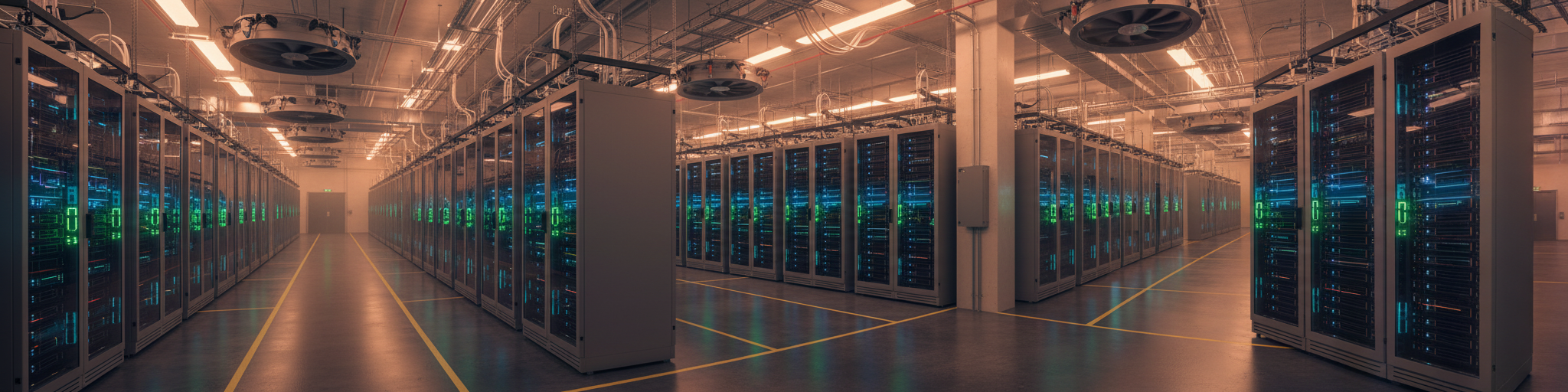
Atlas Cloud works with data center partners instead of owning facilities, which speeds up deployment but introduces a dependency layer. When capacity or SLA issues occur, the partner model can create confusion about who handles resolution.
Crusoe owns and operates its entire data center stack, from construction to hardware. This vertical integration gives them tight control over uptime and maintenance. However, Crusoe's locations follow energy availability instead of network topology. If your workloads require low-latency connections to existing cloud resources in us-east-1 or eu-west-1, Crusoe's data centers may not align with your architecture.
Energy-optimized locations don't always match where your data lives or where your users connect. Neither provider matches the geographic coverage of hyperscalers. You're choosing between Atlas Cloud's partner-dependent capacity or Crusoe's energy-first site selection.
Atlas Cloud and Crusoe both operate in the specialized GPU cloud market where neo-cloud providers deliver 40-85% lower costs than hyperscalers like AWS and Azure in 2026.
Neither publishes transparent per-hour pricing on their websites. You'll need to contact sales for quotes based on your GPU requirements, cluster size, and commitment term. That opacity makes direct comparison difficult before procurement discussions.
Atlas Cloud's partner-dependent capacity model may introduce cost variability depending on which data center handles your workload. Crusoe's owned infrastructure provides more pricing consistency, though their energy-first location strategy may require data transfer across longer distances.
The headline GPU rate represents only part of your actual spend. You need to account for total cost including data transfer fees, storage costs, and minimum commitment requirements. Hidden fees inflate GPU bills 20-40% beyond the advertised rate. Neither provider offers granular billing transparency to track where costs accumulate during development cycles.
We built Thunder Compute Local to solve the friction you hit with specialized providers. Atlas Cloud and Crusoe both require sales conversations to see pricing. We publish rates directly: A100s from $0.99-$7.80/hr and H100s from $2.29-$11.98/hr across providers. No quotes, no procurement cycles.
Location constraints disappear when you're pulling from multiple cloud providers instead of betting on energy-first data centers or partner networks. Our orchestration layer connects you to available capacity without locking you into specific geographic footprints or hardware tiers.
If you're on a Mac, you already know the compatibility headaches. We're the only verified provider supporting Apple Silicon for GPU workloads. That means native access without virtual machines or workarounds that kill performance.
The VSCode extension gets you connected in one click. No SSH configuration, no Docker setup requirements, no waiting on cluster provisioning. Persistent storage and snapshots work across sessions, and you can swap hardware when your workload changes.
We open a dedicated Slack channel with every customer. When something breaks or you need capacity fast, you're talking directly to us instead of cutting through partner support chains or energy infrastructure dependencies.
Atlas Cloud's partner model and Crusoe's energy-first campus strategy both solve capacity problems but create friction around location, pricing transparency, and deployment speed. Comparing cloud GPU providers shows you need access to multiple networks instead of betting on one infrastructure approach. We connect you to available GPUs across providers with rates published directly on our site, one-click VSCode access, and actual Apple Silicon support. If you're in school working on AI research or projects, our student program gives you the same GPU access at rates that make sense for learning.
Atlas Cloud partners with data centers for capacity while Crusoe owns and operates its entire stack by building facilities at low-cost energy sites. So Atlas Cloud can deploy faster but depends on partners for support, while Crusoe controls uptime but restricts locations to energy-first sites that may not align with your network topology.
Crusoe is better if you need hardware flexibility, offering NVIDIA A100s through GB200 NVL72 systems plus AMD MI300X and MI355x options. Atlas Cloud only provides H100 SXM and H200 SXM configurations, which limits your ability to test across different GPU types or optimize costs with lower-tier hardware.
Neither provider publishes transparent hourly rates on their websites, both require sales conversations for custom quotes based on cluster size and commitment terms. This pricing opacity makes direct comparison impossible before procurement discussions, and actual costs include hidden fees for data transfer and storage that can inflate bills by 20-40% beyond quoted GPU rates.
Consider Thunder Compute Local when you need transparent pricing (A100s from $0.99-$7.80/hr, H100s from $2.29-$11.98/hr), Mac compatibility with native Apple Silicon support, or one-click access through VSCode without SSH configuration. We're better for teams that want to avoid sales cycles, geographic limitations, and vendor lock-in to specific hardware tiers.
Atlas Cloud doesn't support Kubernetes. You'll need to build that layer yourself or use external solutions if you need K8s-native tooling. Crusoe offers AutoClusters for orchestration, but the specifics of what it handles compared to full Kubernetes support aren't publicly detailed, so verify capabilities before committing to large deployments.


